Trauma-focused counselling and psychotherapy in Woking and Guildford
Counsellor, Psychotherapist, Deep Brain Reorienting and EMDR Therapist in Woking, Guildford and Online.
Craig is an experienced psychotherapist working with a wide range of client difficulties. Craig has special interests in trauma and trauma-based responses. Such as: PTSD, CPTSD, EUPD/BPD and dissociative responses including DID.
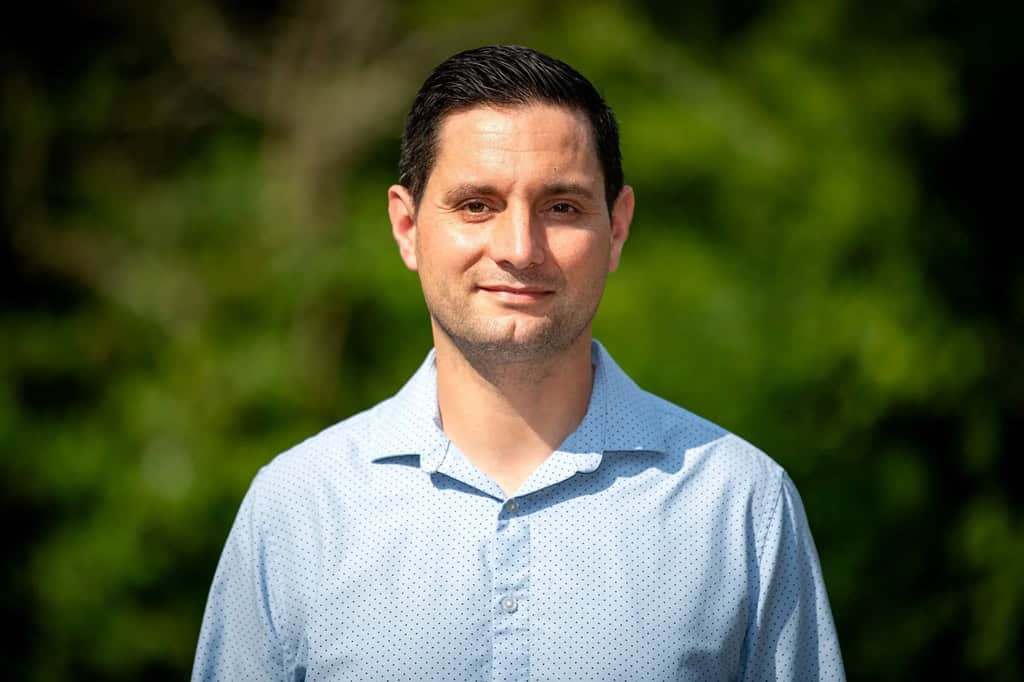

When looking for an experienced counsellor, it is important that you feel confident that the person you choose is right for you.
That’s why I offer a free 20 minute phone call for me to get a general overview before booking in for a first session and I am always happy to discuss any questions you may have to help you decide if therapy with me is right for you.

Whatever the reason you decide to come into therapy, rest assured that I will provide a warm, friendly, confidential and professional counselling service from an experienced practitioner. I understand that making the first contact is often the hardest step for many people and will endeavour to make the process as comfortable as possible.
I have put a lot of information on this site for you to read, or you can get in touch using the contact form below.
Why understanding isn’t always enough
Many people who contact me have already done a good deal of thinking about what is going on for them. They can describe their history clearly, and often know exactly where a pattern comes from. And still, in the moment, the body does what it has always done.
Most talking therapy works through understanding, and for a great many difficulties, that is genuinely enough. But the threat response lives somewhere older and faster than the part of you that makes sense of things, and it does not wait to be consulted. You can hold a completely accurate account of your own history and still find your chest tightening when someone raises their voice.
That gap between understanding something and being free of it is not a failure. It is information, and it is usually where the real work begins.
This is why I don’t work purely by talking things through. If a pattern is held in the nervous system rather than in conscious thought, then thinking harder about it rarely shifts it. The work has to reach the part of you that reacts, not just the part that explains.
How I work
My approach is trauma-focused and integrative. Alongside standard counselling conversation, I am trained in EMDR, attachment-focused EMDR, and Deep Brain Reorienting, three ways of working directly with how the nervous system holds onto difficult experience, rather than only with the account of it. Which of these I would suggest, if any, depends entirely on what you bring.
I work with trauma and complex trauma, anxiety, depression, dissociation, and BPD/EUPD, and usually find these overlap more than the labels suggest. A childhood that looked fine from the outside, a relationship that slowly took something from you, an event you have never called traumatic because other people have had it worse: all of this is welcome here.
EMDR uses bilateral stimulation, usually eye movements, to help the brain reprocess distressing memories so they lose their charge. Deep Brain Reorienting works with the earliest, most automatic part of the threat response, often reaching material that talking alone cannot access. Neither approach requires you to relive an experience in detail before it can help.
Whatever we end up working on, the relationship between us matters as much as any technique. I aim to be direct, warm and honest about what I think will help, and equally honest if I think something isn’t working. Everything discussed in session is confidential, within the limits set out in my terms of service.
What sessions look like
Sessions run for 50 minutes, at the same time each week, with 90-minute sessions available by arrangement for deeper trauma processing work. Therapy is open-ended rather than a fixed course, and we review it together as we go. I see clients from a therapy room in Woking, a minute’s walk from the station, from The Eaves in Guildford, and online across the UK.
Many people feel some apprehension before a first session, wondering what to say or where to begin. You don’t need to arrive with a clear account of the problem. We start with whatever you bring, and the shape of the work builds from there.
Is now the right time?
There’s rarely a perfect moment to start therapy. Some people come after a specific event, others after months or years of a low-level difficulty that has finally become too much to carry alone. Both are valid reasons, and neither needs to have reached crisis point first.
If you have been thinking about it for a while, that is usually a sign worth paying attention to. You don’t have to have decided that therapy is definitely for you. Booking a first conversation is not a commitment to anything beyond that conversation.
If you’re unsure, the free 20 minute call is exactly the place to ask. There’s no obligation, and no pressure to explain more than you feel ready to share.
A conversation before you commit to anything
Everything starts with a free 20 minute phone call. There is no charge for it and no expectation that you book afterwards. It is a chance to say what has brought you here, and to ask whatever you want to ask, including whether I am the right person.